
Before choosing between 1P, 2P, 4P, and 6P pods, buyers should first answer these questions:
| Selection Question | Why It Matters |
|---|---|
| How many people normally use the pod at one time? | Capacity should follow the real user group, not only the available floor space. |
| What task will happen inside the pod? | Private calls, interviews, video meetings, small meetings, and team discussions need different pod capacities. |
| How long will people stay inside? | Short calls, one-on-one talks, and longer team discussions create different comfort and ventilation expectations. |
| How often will the pod be used? | High-frequency use may require a different pod mix and configuration review. |
| Where will the pod be placed? | Different workspace zones, such as open office areas, HR areas, and meeting areas, may require different pod capacity planning. |
| Is this a single pod purchase or a multi-pod project? | A mixed layout usually combines phone booths of different capacities to support different workspace needs. |
Start with Use Case, Not Just Size
Office pod capacity should be selected based on the intended use first, then reviewed together with user count, meeting duration, usage frequency, placement, floor plan, and project requirements. Before requesting a quote for 1P, 2P, 4P, 6P, or a mixed pod layout, buyers should ask the factory for a capacity recommendation, along with the latest specifications and configuration suggestions.
Quick Capacity Selector
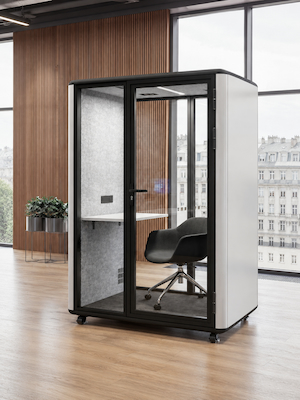
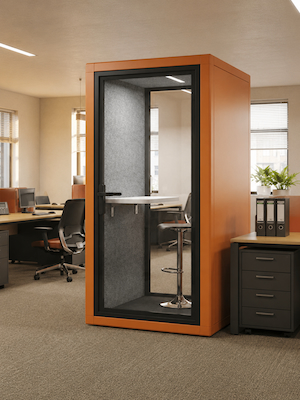
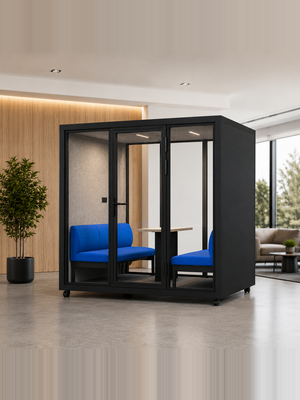
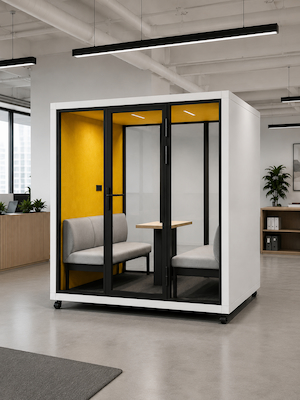
Use 1P as the starting point for one-person calls or focused work, 2P for interviews and one-on-one conversations, 4P for small meetings, and 6P for team discussions or meeting-room supplement layouts.
Use this quick selector to match pod capacity with the main task first. The final choice should still be checked against layout, duration, usage frequency, configuration needs, and quotation inputs.
| Capacity | Best For | Recommended Use Direction | Not the Best Fit For | Route To |
|---|---|---|---|---|
| 1P Office Pod | One person | Private calls, video meetings, focused work, and high-call open office areas | Two-person interviews, group discussions, or shared meeting use | 1 person office pod |
| 2P Meeting Pod | Two people | Interviews, one-on-one conversations, management talks, and private two-person discussions | Three or more people, team meetings, or longer group collaboration | 2 person meeting pod |
| 4P Meeting Pod | Two to four people | Small meetings, project discussions, remote collaboration, and small group calls | Larger team meetings, formal conference-room requirements, or one-person call use | 4 person meeting pod |
| 6P Meeting Pod | Four to six people | Team meetings, project discussions, meeting-room supplement layouts, and larger pod planning | One-on-one talks, private phone calls, or large formal boardroom requirements | 6 person meeting pod |
Not sure which pod capacity fits your project? Share your layout, expected users, quantity, destination country, and socket standard, and our team can help recommend the right 1P, 2P, 4P, or 6P option
Before Requesting Dimensions or a Quote
After reviewing the quick selector, buyers should still confirm whether the pod dimensions fit the office layout and prepare the key requirements needed for supplier quotation.
The difference between 1P, 2P, 4P, and 6P pods is not only size. Each capacity supports different user counts, use scenarios, and project requirements.
1P Office Pod
Confirm Before Requesting Files
How many people need private call or focus space
Why It Matters
Helps estimate the number of single-user booths needed for daily use
Details to Share
Quantity, placement area, destination country, and socket standard
2P Meeting Pod
Confirm Before Requesting Files
Team size, meeting frequency, and whether the pod will supplement existing meeting rooms
Why It Matters
Helps confirm whether the project needs larger pod capacity or a separate traditional meeting-room plan
Details to Share
Expected team size, quantity, layout plan, destination country, and socket standard
4P Meeting Pod
Confirm Before Requesting Files
Expected small meeting size, meeting duration, and planned location
Why It Matters
Helps confirm whether the pod fits project discussions, small group calls, or remote collaboration
Details to Share
Expected meeting size, quantity, layout location, destination country, and socket standard
6P Meeting Pod
Confirm Before Requesting Files
Team size, meeting frequency, and whether the pod will supplement existing meeting rooms
Why It Matters
Helps confirm whether the project needs larger pod capacity or a separate traditional meeting-room plan
Details to Share
Expected team size, quantity, layout plan, destination country, and socket standard
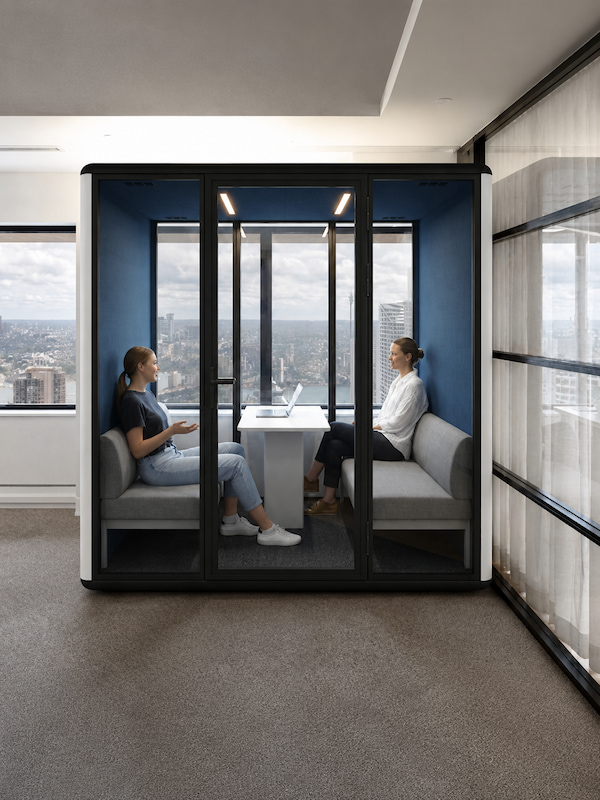
What Should Buyers Review When Choosing Pod Capacity?
The right office pod capacity should not be based on seat count alone. Buyers should start with the actual use case, then review user count, stay duration, usage frequency, office layout, and project budget before making a decision.
People Count
Start by confirming how many people will normally use the pod at one time, rather than how many people could physically fit inside. The actual user count directly affects whether a 1P, 2P, 4P, or 6P pod is the right direction.
Task
Different tasks require different pod capacities. Private calls and one-person video calls are usually better suited to 1P pods. Interviews and one-on-one conversations may fit 2P pods, while small meetings and team discussions may require 4P or 6P pods.
Meeting Duration
Short calls and longer discussions require different planning. The longer people stay inside the pod, the more important it becomes to review space comfort, seating, and ventilation.
Usage Frequency
Frequent call needs are often better supported by several smaller pods. Occasional team discussions may be better served by a shared larger pod.
There is no fixed ratio that works for every office. A better approach is to review the actual needs, floor plan, user flow, and budget before confirming the final pod capacity mix.
Need help choosing the right capacity? Share your expected users, main use cases, layout notes, quantity plan, destination country, and socket standard, and our team can help recommend the right 1P, 2P, 4P, or 6P direction.
When to Use a Mixed Office Pod Layout
When an office needs more than one type of private space, a mixed office pod layout should be considered.
| Planning Signal | Pod Mix Direction |
|---|---|
| Many users need private calls during the day | Add more single-user call or focus points |
| HR or managers need private conversations | Use two-person pods near interview or management areas |
| Project teams need short discussions | Place 4P pods near shared work or project zones |
| Teams need enclosed discussion space | Use 6P pods as meeting-room supplement spaces |
| Different office zones have different needs | Match pod size to activity, location, and user flow |
Instead of using one pod size for every space requirement, buyers should choose different pod capacities based on the intended use and office layout.
There is no fixed ratio between the number of phone booths and the number of employees. The right booth mix usually depends on the frequency of private calls, the number of people involved in small-group discussions, visitor frequency, and the project budget.
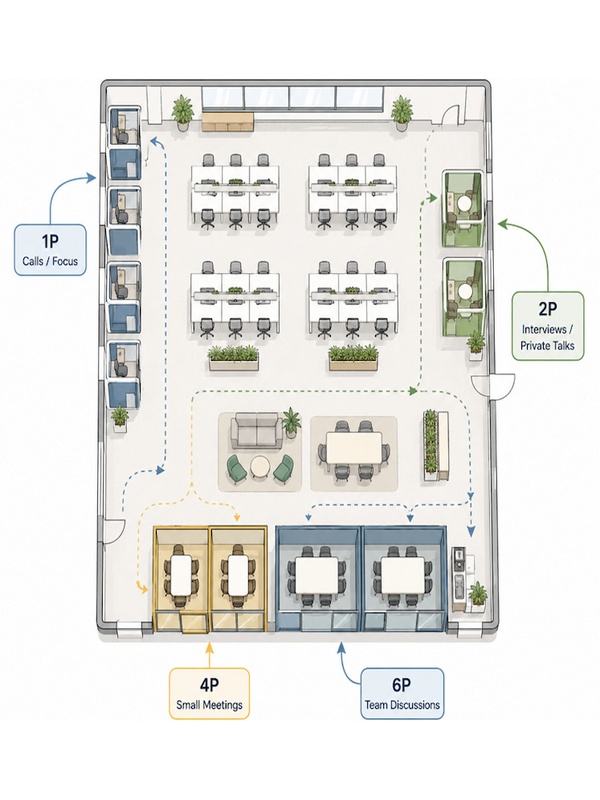
Scenario-Based Capacity Routing
Different office scenarios may need different pod capacities. Use the main work scenario to choose a starting direction, then review layout, users, meeting duration, and usage frequency before final selection.
| offic Scenario | Common Need | Capacity Direction |
|---|---|---|
| Open office privacy points | Private calls, focus work, or short conversations away from open desks | Start with 1P pods; add 2P or 4P pods when private talks or small meetings are also needed |
| Video calls and online meetings | For video calls with customers or colleagues, 1P pods are usually suitable for individual video calls. | For group remote meetings or video discussions, buyers can review 4P or 6P meeting pods. |
| HR interviews | Interviews, onboarding talks, or confidential two-person conversations | Start with 2P meeting pods. |
| One-on-one conversations | Managers, advisors, or project leads need a private two-person space | Consider 2P pods |
| Small project meetings | For team video discussions or remote collaboration | consider placing 4P meeting pods near project areas or workstation zones. |
| Team discussions | For enclosed 4–6 person discussions, consider 6P meeting pods as a flexible supplement to traditional meeting rooms | Review 6P meeting pods as meeting-room supplement spaces |
| Meeting-room supplement layouts | The office needs extra meeting capacity across different tasks and zones | Review a mixed layout with 1P, 2P, 4P, and 6P pods based on task type and office zone |
This routing is a suggested starting point, not a fixed rule. The final capacity plan should be reviewed together with floor area, employee circulation, power access, expected users, meeting duration, and the usage frequency of each space.
After choosing an initial direction, review the related pages on open office planning, video conferencing, or office pods vs. traditional meeting rooms if you need more detailed guidance before confirming the final plan.
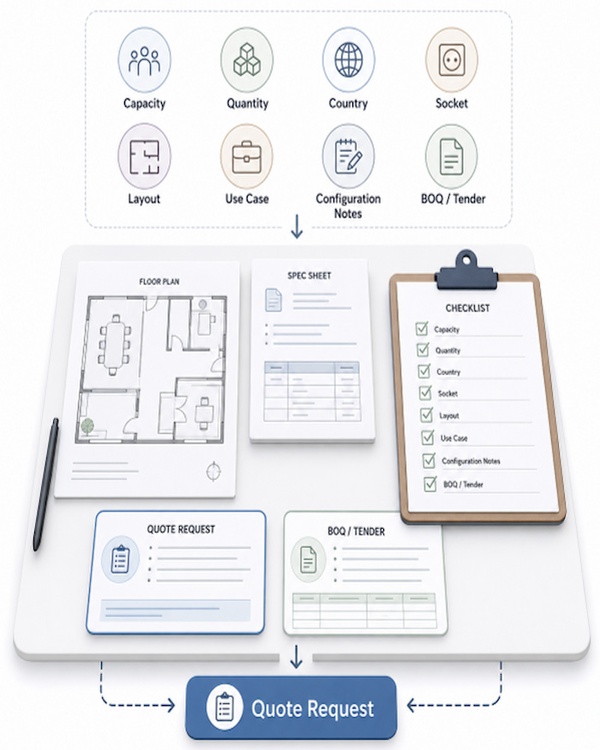
Specification, Layout, and Quote Inputs
Before requesting a quote, prepare the key product details needed for your inquiry.
If you are still unfamiliar with the product, you do not need to prepare every quotation detail in advance. Share your expected use case and layout notes first, and our team can help review whether a 1P, 2P, 4P, 6P, or mixed pod layout is the right direction for your project.
| Information to Share | What to Include |
|---|---|
| Expected capacity | 1P, 2P, 4P, 6P, or mixed capacity if already known |
| Quantity | Estimated number of pods or project quantity range |
| Destination country | Country or region where the pods will be used |
| Socket standard | Required plug, socket, voltage, or project electrical standard if specified |
| Preferred model series | Model A, Model B, Model C, or “not confirmed yet” |
| Layout or floor plan | Office layout, planned placement area, open office zone, corridor-side area, or floor plan if available |
| Main use case | Private calls, video meetings, HR interviews, one-on-one talks, small meetings, team discussions, or meeting-room supplement use |
| Quote term preference | EXW or FOB quotation preference |
| Configuration notes | Color, glass, privacy expectation, power or network needs, ventilation preference, or optional functions |
| BOQ / tender / project requirements | BOQ, tender file, project notes, drawing package, or special requirements if available |
Office Pod Capacity FAQ
Use these quick answers before choosing between 1P, 2P, 4P, and 6P office pods.
How do I choose between 1P, 2P, 4P, and 6P pods?
Start with the main use case. Consider 1P for private calls or focused work, 2P for interviews and one-on-one conversations, 4P for small meetings, and 6P for team discussions or meeting-room supplement layouts.
Is a 1P pod the same as a meeting pod?
No. A 1P office pod is designed for one person. It is usually used for private calls, video meetings, or short focus work. If two or more people need to sit together, review 2P, 4P, or 6P meeting pod options.
When should a project use a mixed pod layout?
A mixed layout is useful when one office needs several types of private space at the same time, such as call booths, interview pods, small meeting pods, and larger team discussion pods. The right mix depends on users, tasks, floor area, traffic flow, and project budget.
Do I need dimensions before requesting a quote?
For quotation review, please provide the product dimensions or a floor plan showing the overall furniture layout. A BOQ is also recommended if available. The more detailed your project information is, the more accurately our team can review the request.
Can I request a capacity recommendation for my layout?
Yes. Send your floor plan, expected users, main use cases, quantity plan, destination country, socket standard, and project notes. Our team can help review whether your project should start with 1P, 2P, 4P, 6P, or a mixed office pod layout.